8 posts in series Kubernetes & OpenShift Best Practices in 2026

The Kubernetes & OpenShift Best Practices Guide (2026 Edition)
A seven-part field guide to running Kubernetes and OpenShift in production in 2026 — workloads, resources, scaling, security, Day-2 operations, and compliance.
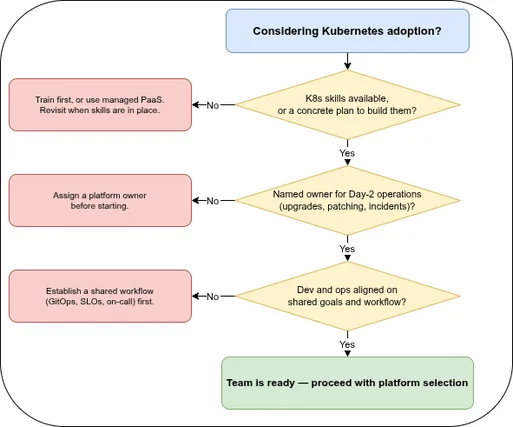
K8s & OpenShift: The Big Picture
Kubernetes in 2026 is boring infrastructure — the real question is whether you run it well. When K8s or OpenShift fits, when it does not. Part 1 of 7.
K8s & OpenShift: Building Workloads Right
Container image hygiene, health probes, graceful shutdown, and securityContext — what every workload running in Kubernetes has to get right. Part 2 of 7.
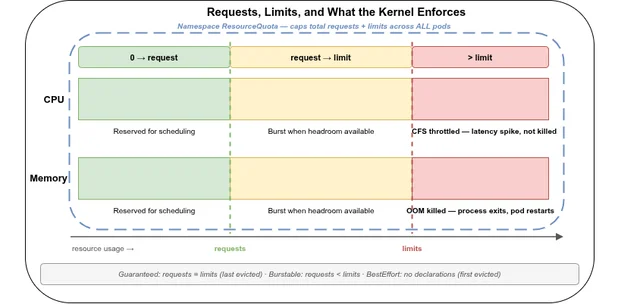
K8s & OpenShift: Resource Management
How Kubernetes enforces CPU and memory boundaries: requests vs limits, QoS classes, cgroup v2, and what happens when a container hits its limit. Part 3 of 7.
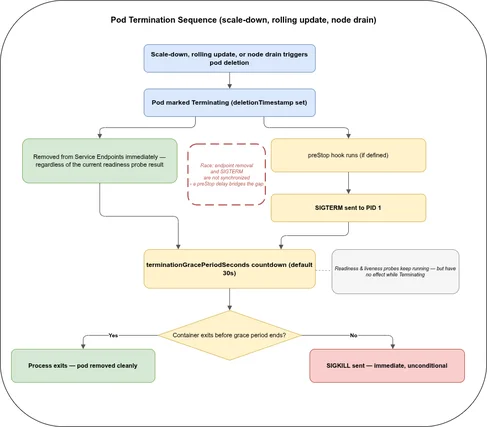
K8s & OpenShift: Scaling & Resilience
HPA, VPA, cluster autoscaler, pod disruption budgets, and topology spread — how to scale Kubernetes workloads and keep them available under load. Part 4 of 7.
K8s & OpenShift: Security
RBAC, Pod Security Admission, NetworkPolicy, and supply-chain controls — the security practices every Kubernetes production workload needs. Part 5 of 7.
K8s & OpenShift: Day-2 Operations & GitOps
GitOps with Argo CD and Flux, observability, FinOps controls, and cluster upgrade strategies — keeping a Kubernetes cluster healthy after launch. Part 6 of 7.
K8s & OpenShift: Compliance
NIS2, DORA, PCI-DSS, HIPAA, and CRA controls mapped to Kubernetes configuration — audit logging, log retention, and incident reporting. Part 7 of 7.